Project Overview
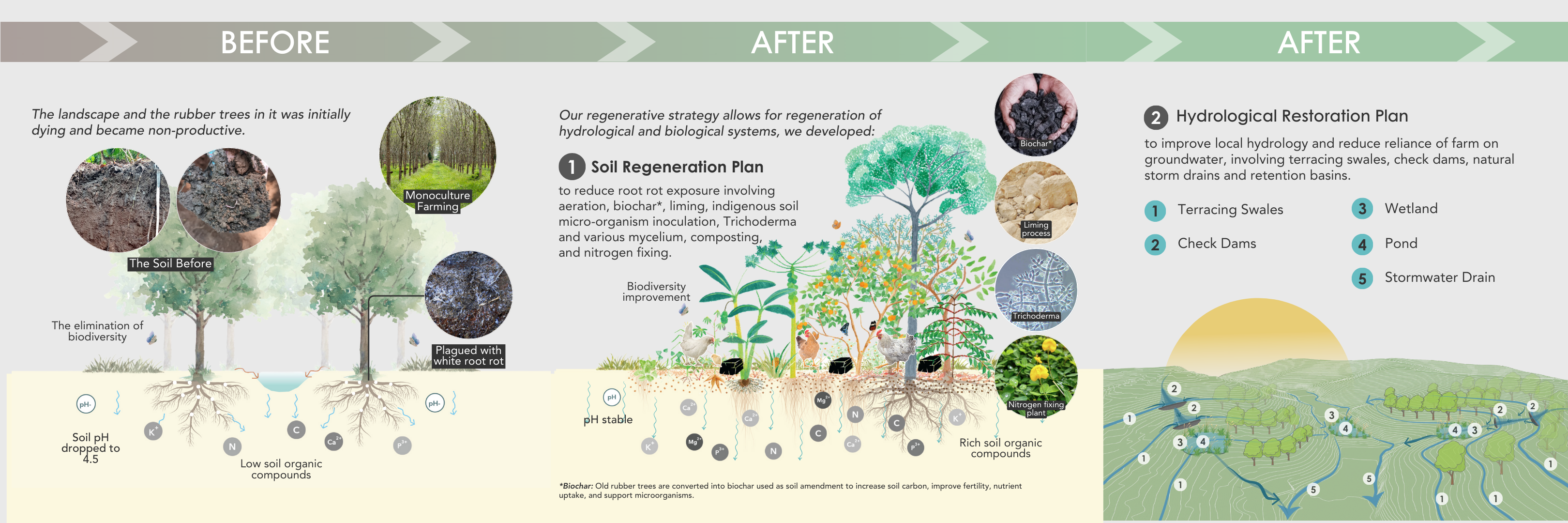
The N Project is a pioneering regenerative agrotourism initiative that encompasses three resorts, a public restaurant, and a themed garden, all set within a thriving syntropic fruit farm. The project was conceived as a legacy project to restore a dying rubber plantation, plagued by white root rot, low soil organic matter, and a dangerously acidic pH of 4.5. Eco-Mantra then reimagines the entire concept into a biodiverse and resilient destination. Through Syntropic Agroforestry, conservation and integrated water management practices, Eco-Mantra has introduced 30+ productive crops, increased biodiversity, ecosystem resilience and restored healthy soils to support more productive landscapes. In addition, a conservation zone is also built for indigenous food forests in steep sloped areas.
Unique Sustainability Feature
Our regenerative strategy targeted both biological and hydrological systems, breathing life back into the land. Key developments include:
 Soil Regeneration Plan:
Addressing root rot and poor soil conditions through aeration, biochar application, liming, indigenous microorganism inoculation, Trichoderma and mycelium cultivation, composting, and nitrogen-fixing techniques.
 Hydrological Restoration Plan:
Revitalizing local hydrology with terracing, swales, check dams, natural storm drains, and retention basins to reduce reliance on farms and groundwater.
More About Its Environmentally Sustainable Design Features
Our regenerative strategy targeted both biological and hydrological systems, breathing life back into the land. Key developments include:
Energy:
Passive Design: Buildings utilize rammed earth, insulated roofs and walls, and natural ventilation to minimize energy consumption.
Energy-Efficient Systems: Centralized VRV systems, heat pump water heaters, and induction stoves contribute to overall energy efficiency.
Onsite Renewable Energy: Solar panels installed on building roofs generate renewable energy, contributing to the project’s goal of becoming energy-positive.
Water:
Hydrological Restoration: Implementing terracing swales, check dams, natural storm drains and retention basins to Improve local hydrology and reduce reliance of farms on groundwater
Integrated Building Water Management: Rainwater harvesting systems and low-flow water features are incorporated into the buildings to conserve water.
 Material Management:
Biospetic Wastewater Recycling: Biospetic systems treat and recycle wastewater, further promoting water conservation on-site.
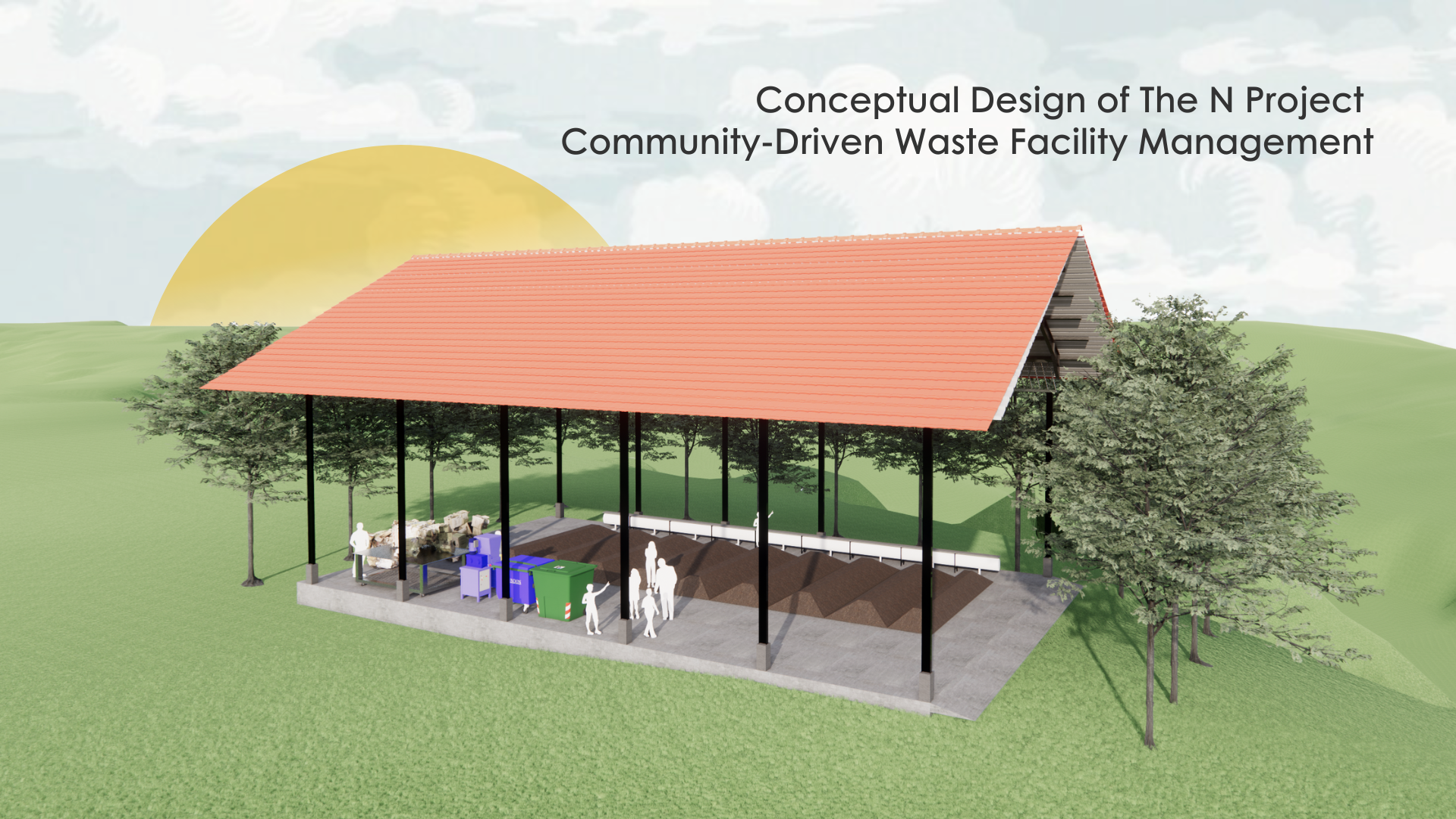
Net Positive Waste: By prioritizing local materials, creating community waste infrastructure, and establishing on-site composting, the project aims for a net-positive waste approach.
 Ecosystem:
Regenerative Agriculture: Syntropic farming techniques, including planting over 30 diverse species in natural succession, combined with organic fertilizers, regenerate the soil and promote ecosystem biodiversity.
 Well-being:
The project maintains a sustainable microclimate through eco-friendly road design and offers educational spaces where visitors can learn about sustainable practices, enriching their experience while promoting community awareness.
Environmental Impact & Savings
Electricity Savings: 34%
31,037,620kWh
Water Savings:
1,192,200,000L
Waste to Landfill Reduction:
66,820,000kg
Carbon Emission Reduction:
79,200,000kg CO2e
Savings calculated over a 20 year lifetime.
Project Gallery