

Date Published: April 22, 2022
Written by: Adele Tresarrieu / Edit by: Sean Nino Lotze
Today, we celebrate the #earthday2022. Every year on April 22, Earth Day’s participants demonstrate their commitment to environmental protection and restoration.
However, regarding the alarming conclusions of the latest IPCC report, is it really a time for celebration?
Yes, it is. It is time to encourage visionary leaders to show the path toward mitigating global warming to 1.5°C.
It is time to recognize that the window for climate action has not yet closed.
It is time to emphasize that solutions to the climate crisis already exist—and they belong to the people.
Working hard for something we don’t care about is called stress, but working hard for something we love and truly care about is called passion. Finding a sense, a belief, and the spirit behind your company’s environmental journey brings a renewed spark to life. It creates the opportunity to ask and enable your younger and passionate team members about their ideas, dreams, and optimism. It creates the opportunity to redesign life and the built environment that provides our daily and local life with structure.
According to the latest IPCC report, pathways that limit global warming to 1.5°C with no or limited overshoot (up to 0.1°C and for up to several decades) require clear and deep emission reductions by 2030. Experts forecast this reduction to be at least 40-50% from 2010 levels.
With such a tight timeline, it is absolutely essential for all leaders to understand environmental sustainability within their organizations and built environments.
The building sector contributes 40% to the global carbon budget.
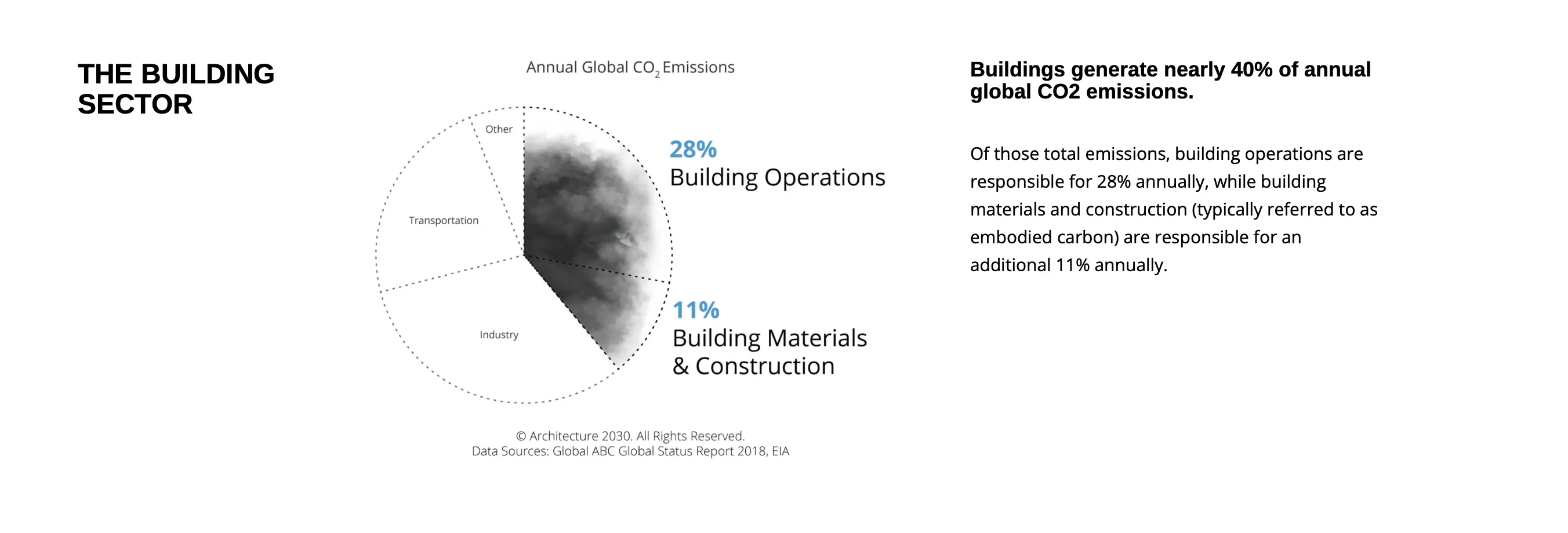 In the past decade, the building industry in Indonesia has increased exponentially. Hospitality building and tourism infrastructures such as hotels, villas, beach clubs, and other manmade destinations were massively established in a short period of time. However, in order to handle the great growth, it demanded huge resources of energy, water, and building materials, which ultimately generated millions of tonnes of carbon emissions.
We must reignite and find a sense, a belief, and a spirit within our built environments. We must take accountability for our mistakes and take responsibility for the planning that has gone wrong.

Everyone in the building industry must be aware of the need to design and implement ambitious emission reduction strategies. Everyone must minimize their resource footprint. We must envision becoming carbon neutral and energy- and water-positive. Our built environment must be regenerative, enhancing the environment’s capacity to recover and thrive around us.
The first step is to take account of our own environment and to learn about the biodiversity that surrounds us. Then we must define our own carbon budget, and design a baseline and pathway toward NetZero. Designing a holistic emission reduction plan and environmental decision-making framework requires leadership and it requires listening to your young and passionate team members.
It is time to encourage leadership that makes your employees feel safe and proud of their achievements. Sharing a circle of trust that believes in restoring the environment and creating trust in an uneven economy, doing more than just creating jobs, means taking on big responsibility. The window for climate action has not yet closed and we need to take immediate action.
We need more leaders to drive the change.
#EarthDay #InvestInOurPlanet #globalwarming #netzero #Sustainability#energy #environmental #building #tourism #bali #indonesia
Contact us: