
Date Published: July 19th, 2024
Written by: Vania Dian Gunawan, edited by Sean Nino Lotze and Charlene Octavian

Source: Gary Bencheghib Instagram
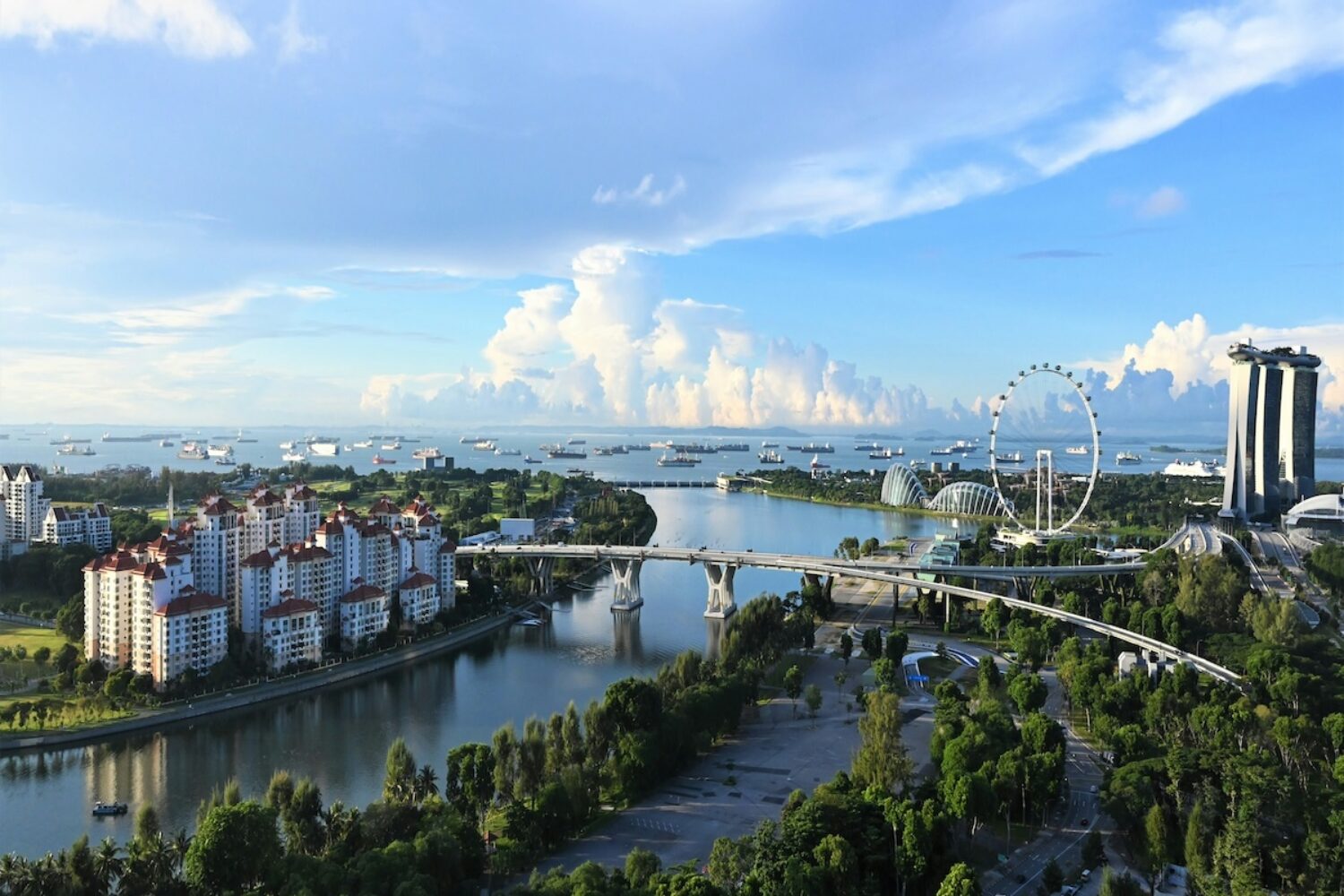
Southeast Asia’s construction boom has gained global attention. Bali is not alone in its massive increase in built environments and uptake of grey concrete & steel buildings and black tarmac roads. A post from last year showed the significant development in Canggu from 2013 to 2023, transforming green open spaces, rivers, waterways, forests and wetlands — into roads, shops villas, resorts, and all kinds of other real estate assets.
The 10 member economies of the Association of Southeast Asian Nations (ASEAN) are among the world’s fastest growing. Their accelerated transition to sustainable energy and green building would not only cut carbon dioxide (CO₂) emissions and fossil fuel imports, according to the SEA Energy Outlook 2022, but also speed up universal access to well-being and provide a reliable framework to reduce risk for investors and improve competitiveness in the face of increasing climate crisis. (Southeast Asia Energy Outlook 2022 – Analysis – IEA)
There is a lack of care and a lack of checks and balances and local expertise when it comes to green building and green construction practices.
A paradigm shift in how we conceptualize, plan, organize and invest into real estate could far better align with the future climate and weather risks that we all will be subjected to. This is not only a collective and or political risk, but also a very personal one, that we all should consider and pay attention to closely. Buildings should stand the test of time and be resilient in the face of climate change.
Introduction to Green Construction
Governments across Southeast Asia have been actively promoting environmental protection through market driven policies, regulations, and financial incentives and have been creating more transparency for foreign real estate investors. Indonesia has improved its macroeconomic and structural policies over the last 15 years and its economy boasts a strong and stable growth rate. The 2023 real estate market in Indonesia is growing to USD 81.24 Billion $, from USD 61.22 Billion $, with a Compound Annual Growth Rate of 5.82%. (Indonesia Real Estate Market Outlook – Analysis & Report (Mordor Intelligence)
There is still a huge gap in the implementation of financial incentives for green construction, and the construction industry has been one of the major destructive social forces to the environment. Land conversation excessive resource use, overuse of concrete and steel and the advent of manufactured and standardized building has taken priority over careful planning and design for and with the environment.
Globally, construction of buildings accounts for over 30% of natural resource extraction and 25% of solid waste generation. This is largely due to the linear economic model of “take, make, dispose of”. In Indonesia, despite being the fourth-largest contributor to Gross Domestic Product (GDP), this sector also contributes one-third of the country’s CO₂ emissions. With urbanization in Indonesia expected to reach 71% by 2030, emissions from construction are projected to increase by 4.5% annually.
Operational construction activities use natural resources and energy, with fossil fuels still a major source of energy for heavy industries. The materials used in buildings require energy for extraction and processing, and once constructed, buildings themselves consume energy during their use. Carbon emissions can be significantly impacted by the production and transportation of goods. Water streams may get contaminated by mining for raw materials. Currently, the production of cement generates 2.8 billion tonnes of CO₂ emissions every year worldwide. If present development rates persist, this amount might surpass 4 billion tonnes annually. Despite these challenges, green construction offers the potential to greatly increase efforts toward enhancing global sustainability.
Green construction is a series of construction activities from planning, designing, construction & destruction, implementation, operations, and use of products where each stage aims to reduce emissions and pollution and make an eco-friendly property that prioritizes resource preservation. It involves careful planning and organizing, supervising, coordinating, and budgeting tasks at the project site and requires experienced architects and ESD engineers.
Investors, contractors and project managers in green construction must strive to minimize their own environmental footprint, pollution, and want to improve the local conditions and soil, reduce airborne dust, improve waterway sedimentation, and use eco-friendly materials with similar specifications as conventional ones. To achieve these goals, specific principles guide the practice of green construction. Here are the principles of Green Construction:
The Principles of Green Construction
-
Careful Study and Understanding of the Local Environment
Evaluating and valuing the land, prevailing winds, microclimates, humidity and rainfall and soil and geology first is crucial because real estate owners need to understand their own opportunities and risks in way that protects their personal investment and future outcomes. Engaging in carefully planned environmental studies will provide a baseline of knowledge and understanding for green construction. Interconnectedness recognizes the interdependence of human and environmental health. Understanding the environment leads to innovation and efficiency and drives technological and behavioral change to reduce environmental impact (Weizsäcker).
-
Prefabricated Materials in Controlled Environments
Indoor construction in controlled environments, supported by technologies like Building Information Management (BIM) and prefabrication, enhances the quality of building materials and reduces waste, minimizes on-site constraints and weather challenges, and optimize planning and assembly in a well-equipped warehouse, providing advantages over limited on-site construction environments. This is proving especially true in southeast Asia where skilled construction labor is hard to find.
-
Appropriate Land Use
Maintain or expand urban greenery to reduce CO₂ and pollutants, such as keeping trees and plants around the location to minimize air pollution. Growing additional large shading trees and building elevated on stilts increases airflow and well-being for all land users.
-
Energy Conservation
Use natural light during the day and use energy-saving equipment. Planning for real quality wiring and cabling and providing MDP’s Main Distribution Panels with clean switch boxes creates energy savings. Energy conservation is provided by saving strategies and by great electrical design and construction.
-
Water Conservation
Focus on reusing and efficiently using sustainable water systems, including twin pipes, greywater reuse, rainwater harvesting, and conservation fixtures. Another method is managing water use with meters, automatic taps, and rainwater collection for non-essential purposes such as car washing and toilet flushing.
-
Project Environmental Management
This emphasizes waste and construction waste. Creating clear delivery and prefabrication areas on site and during construction will reduce waste. By providing designated bins and storage areas for construction and non-construction waste, materials can be collected, repurposed, upcycled and reused.
-
Material Sources and Recycling
Reduce material use by purchasing recycled and used building materials and choose local materials such as reclaimed wood, bamboo, engineered and laminated bamboo, engineered wood, straw, lime, natural clay and earth bricks. Utilizing technologies like 3D printing and BIM software to enhance efficiency, save energy, and minimize waste.
Green Construction Benefits
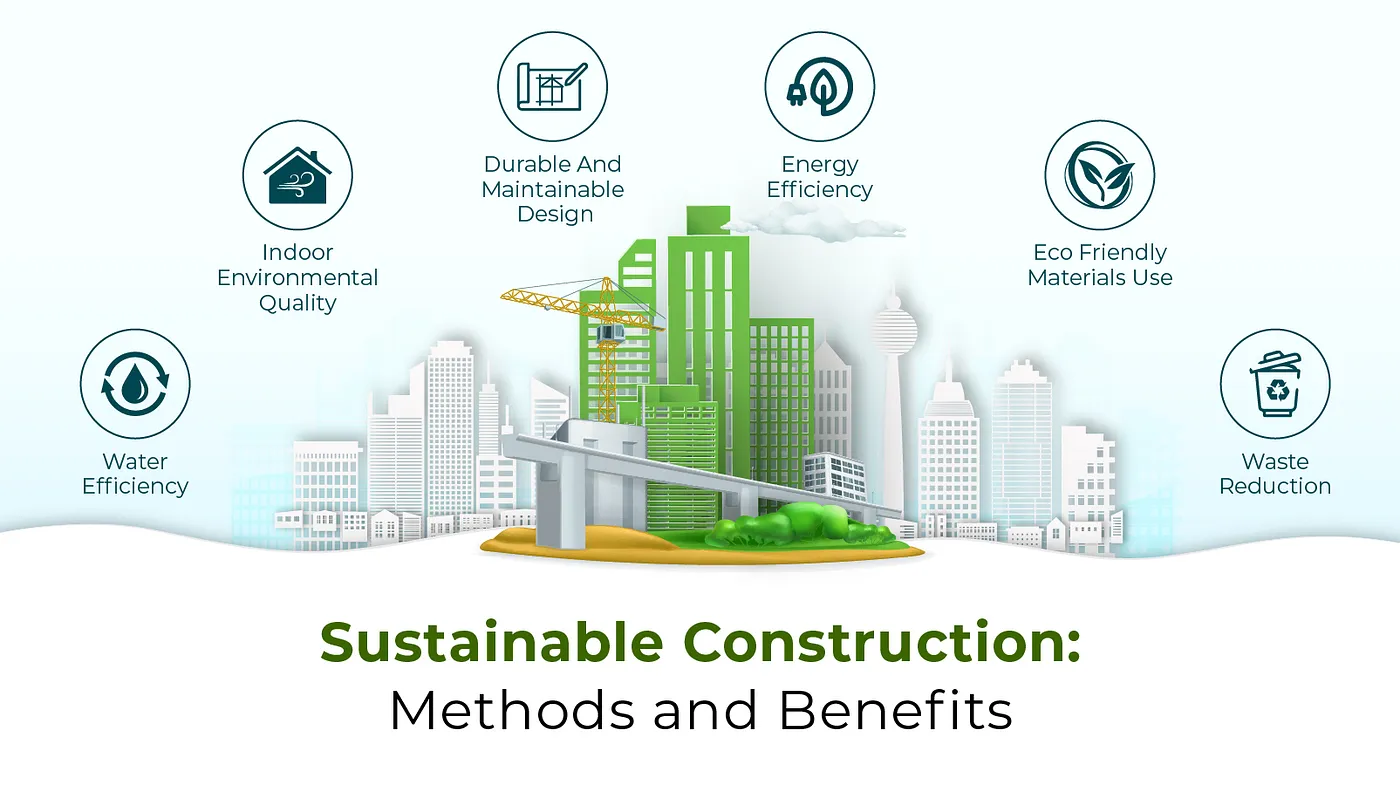
Implementing green construction offers numerous advantages, benefiting the environment, economy, and society. These include:
Source: Muhammad Nadeem | Medium
- Reduce environmental impact by reducing waste and carbon emissions.
- Enhancing buildings and infrastructure resilience to natural hazards, such as floods, earthquakes, and climate change.
- Lowering long-term costs through reduced operation, maintenance, and repair expenses.
- Save short-term costs, for example by reducing waste management, and fuel expenses by implementing more fuel-efficient vehicles.
- Adding value to construction projects by integrating eco-friendly elements, which can attract environmentally conscious customers.
- Providing social and economic benefits by creating local jobs and offering training in sustainability.
The Challanges Faced
Despite its benefits, green construction faces challenges such as limited awareness of its advantages, resistance to change, outdated knowledge, and hesitation from some to make significant initial investments. In Indonesia, there’s still a lack of reliability and proportion in green policies and guidelines. Although Indonesia began considering sustainable development in 2004, regrettably, no rules were in place to support green development between 2009 and 2014.
The infrastructure and legal framework for sustainable development have only recently started to be built. The socialization phase of green construction laws is still ongoing, and the transition era has only begun. Meanwhile, in developed countries like the United States, the appreciation for green construction is manifested through financial incentives, such as tax reductions, loan facilitation, and operational building fee reductions.
Greater government-led socialization efforts and support through training, education, technology, and incentives are needed to strengthen the legal basis of green construction and encourage more people to implement it. Despite initial cost concerns, the growing recognition of green buildings is promising. Because of the lower running costs that come with creating energy-efficient buildings, owners of green buildings believe their properties are worth 7% more than those of traditional buildings. This higher perceived value can be used as justification to somewhat offset any higher expenses associated with using any of the sustainable building methods.
A Call to Action for a Greener Future
Looking back to Bali’s case, ongoing development and construction contribute to the local economy, but aligning these activities with environmental consciousness is important. Architects, builders, and stakeholders must prioritize sustainability. Government support, both central and local, is also essential for managing development and advancing green construction initiatives. Forward-thinking builders can turn challenges into opportunities. It’s time to see green construction as a value-adding measure. Individuals can actively support these efforts by educating themselves on sustainable practices, adopting green building standards, and choosing eco-friendly materials.
Eco-Mantra is an environmental engineering consultancy, focusing on sustainable property design and development. Our goal is to create environmentally conscious properties and minimize negative impacts on the local ecosystem while ensuring occupant comfort. Contact us here if you’re interested in implementing Environmentally Sustainability Design (ESD) on your property.
Reference:
Challenges and Chances of Sustainable Construction in Indonesia: Policy Insights
Green Construction Management: Faktor Penghambat Pada Proyek Konstruksi Gedung di Kota Malang
Kajian Faktor-Faktor Green Construction pada Proyek Konstruksi Gedung di Kabupaten Badung
Sustainable Construction: Benefits and Techniques
Sustainable Construction: Why building for a better world is better for business
Tahapan Green Construction pada Pelaksanaan Proyek
The Future of Green Construction Materials
Viral Post Reveals Just How Much Bali Has Changed Over the Years