
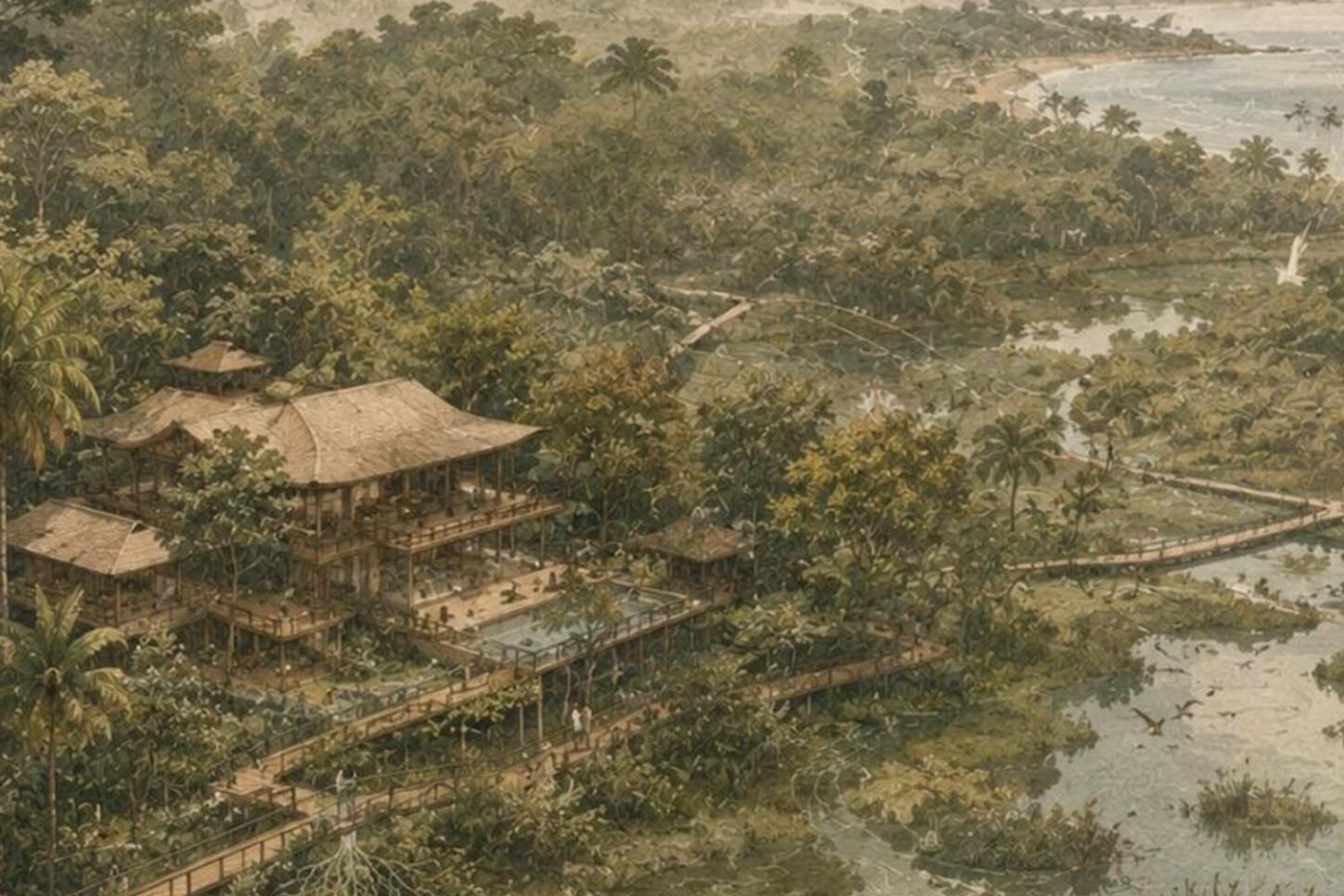
For a decade, sustainability was the differentiator in luxury hospitality. A certification plaque in the lobby, a solar panel on the roof, a no-single-use-plastics policy. That was enough to signal a property had done more than its competitors.
It isn’t enough anymore. Trust in sustainability claims has been eroding for a few years now. Booking.com’s 2026 Sustainable Travel Report its 11th annual edition published in April 2026, found that 39% of travelers didn’t believe accommodations labeled “sustainable” actually were, even as 65% said a credible certification would make them feel better about a stay. Just over a third of travelers in every generation now plan to book a certified property in the next 12 months.
That gap between wanting proof and trusting the badge has pushed the industry toward a new term: regenerative. It shows up in hospitality-school research, luxury-segment trend reports, and developer briefs across Southeast Asia.
The problem: “regenerative” is entering the market vocabulary the same way “sustainable” once did, ahead of any agreed definition or measurement standard. For developers, architects, and operators deciding what to actually build, that gap between vocabulary and verification matters more than the word itself.
Trend 1. From Reducing Harm to Restoring Systems
The distinction hospitality researchers draw between sustainable and regenerative is precise, even if the marketing usage around it isn’t. Sustainability, in its conventional form, means harm reduction: net zero, minimized impact. Regeneration asks a different question: whether a property leaves the watershed, the reef, the local food economy, and the surrounding community in better condition than it found them.
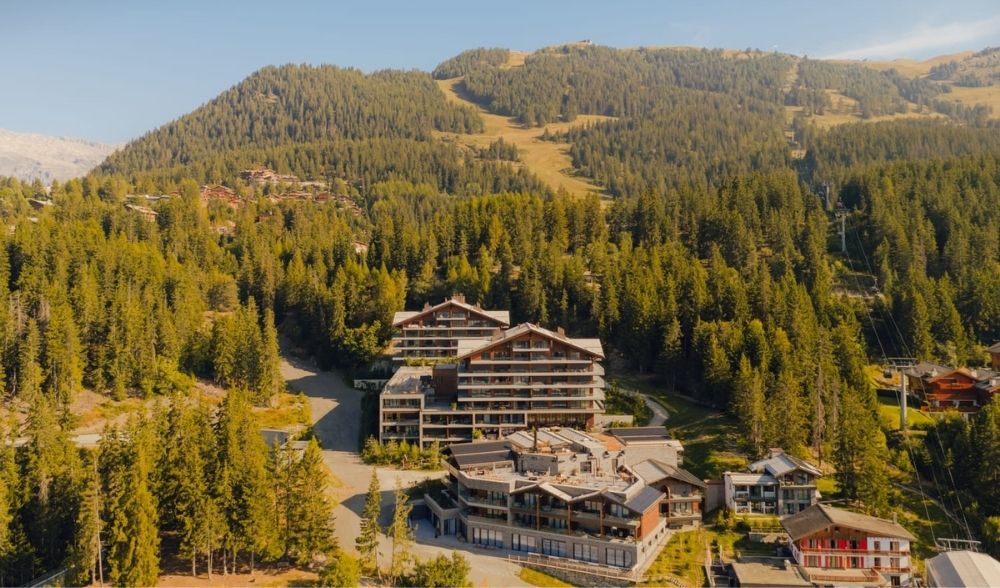
EHL Hospitality Business School, working with the Swiss university HES-SO Valais, has spent the past few years developing a framework for this called the Regenerative Hospitality Canva, tested with properties including Six Senses Crans-Montana, Geneva Marriott Hotel, Hilton Geneva, and Hôtel des Horlogers. The premise: a hotel isn’t a self-contained business. It sits inside a watershed, a food system, a cultural landscape, and a community economy, and its performance gets measured against all four, alongside its own operating costs.
That’s a meaningfully higher bar than a certification badge. It’s also, at this stage, one without an agreed scorecard. There’s no equivalent yet of a LEED point system for regeneration, which is exactly the condition that let “sustainable” drift into marketing shorthand a decade ago.
The Living Building Challenge comes closest. It certifies verified operational performance, based on 12 months of real data after a building opens, a distinction covered in more detail below.
Trend 2. Crowd Avoidance is The Real Luxury Marker
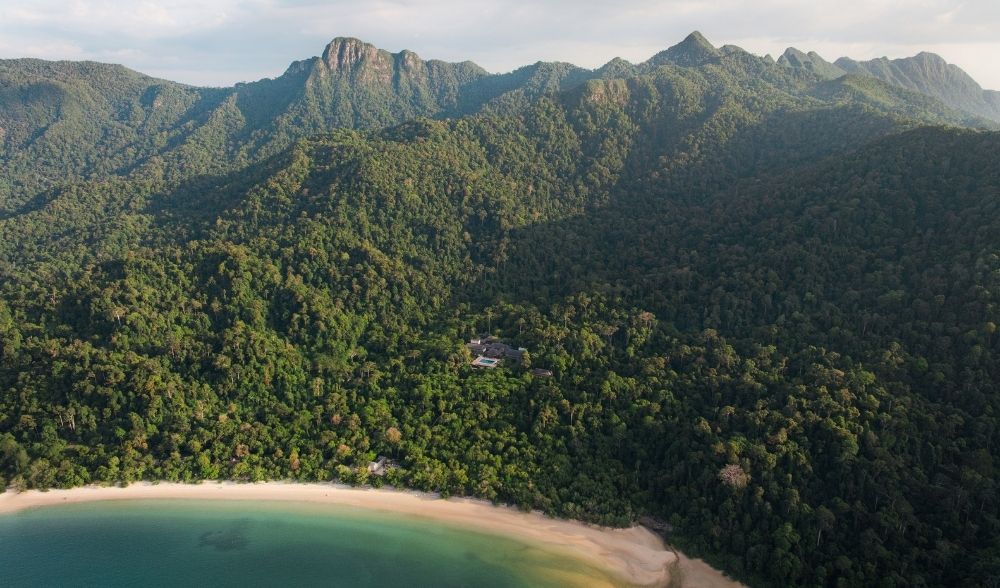
Virtuoso’s 2026 Luxe Report, drawn from 2,485 travel advisors across more than 50 countries, the largest sample the report has run, found something specific: the top marker of sustainable travel among high-spending clients is the ability to visit a destination without a crowd.
Forty-five percent of advisors said clients are adjusting travel plans because of climate change. Of those, 76% are shifting to shoulder-season travel and 75% are prioritizing destinations with milder weather.

Bhutan is a useful illustration of what this looks like as policy rather than sentiment. Its Sustainable Development Fee, currently set at USD 100 per person per night through August 2027, is a price-based throttle on visitor volume: a formal version of the same instinct guests are now showing informally elsewhere.
Whether a destination sets that price deliberately or simply becomes expensive by reputation, the effect on a developer’s masterplan looks the same either way: fewer keys filled for longer stays at higher rates, and less turnover churn.
Trend 3. Guests Want to Help Build the Place, Not Just Consume It
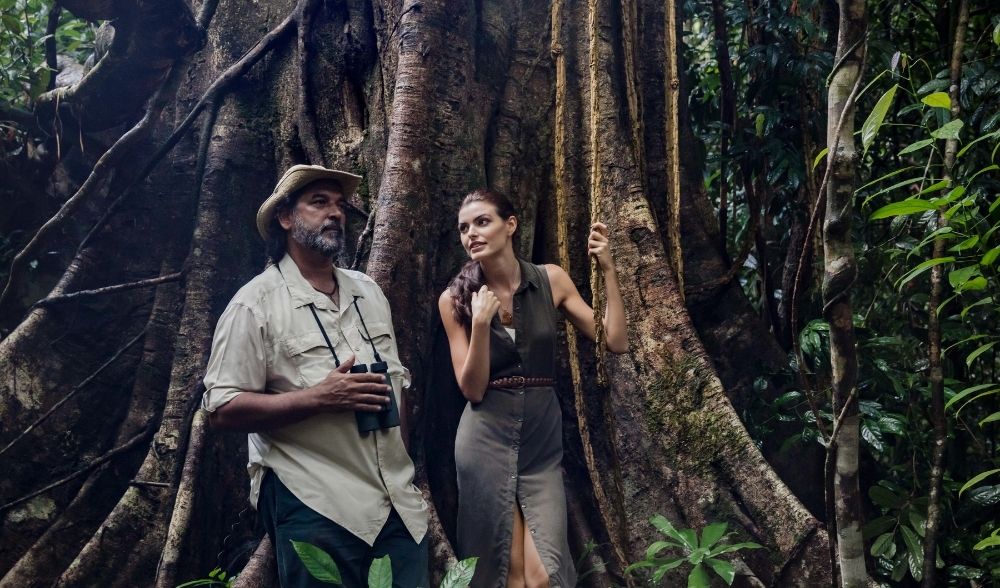
The older model of luxury hospitality treated the guest as a recipient. EHL Assistant Professor Dr. Valentina Clergue, writing for the school’s Hospitality Outlook Report 2026, writing in the school’s Hospitality Outlook Report 2026, describes it as a move from passive enjoyment to active participation. Guests increasingly want to cook alongside the chef, visit a reef restoration site with a marine biologist, or plant something on a property they plan to return to a decade later.
That shift reshapes the physical brief more than it might first appear to. A kitchen garden that exists mainly for the photograph doesn’t hold up under this expectation. It has to feed the kitchen and be walkable enough that guests can see the system working.
Landscape design has to accommodate guest movement, not just frame a view from a terrace. Community relationships need to be visible and structured so guests can engage without it turning into extractive tourism.
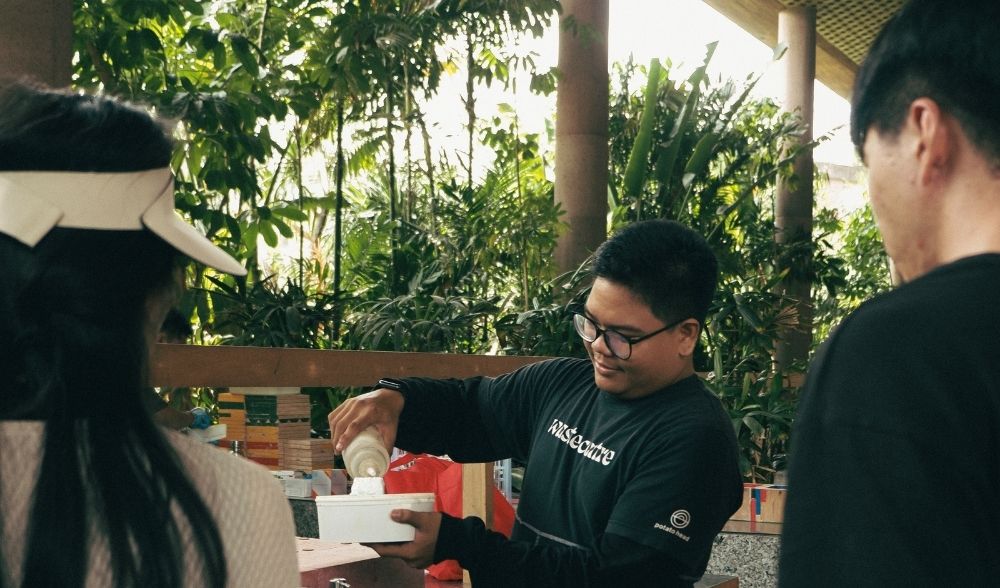
For a masterplan, this means elements that used to sit in the background (food systems, landscape, community ties) now need to be legible and accessible in the foreground.
Trend 4. Guests Are Filtering for Proof, Not Promises
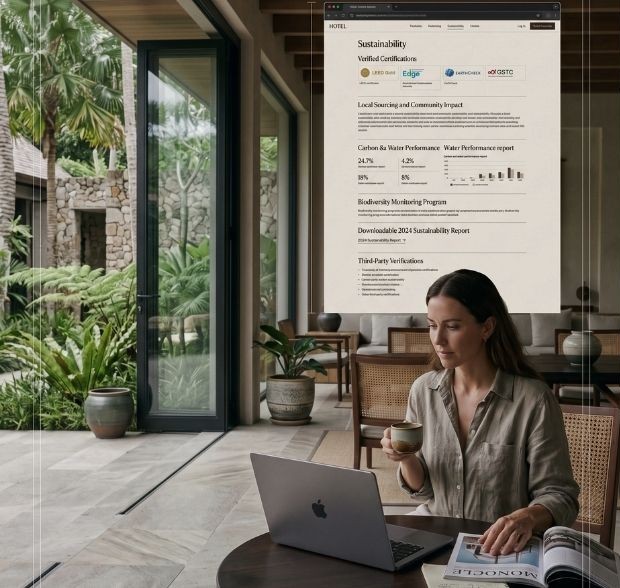
The same trust erosion pushing the industry toward regeneration is also changing what counts as a verified claim. Booking.com’s own research found that 59% of travelers wanted to filter search results by sustainability certification specifically, not a platform’s self-assigned score. That preference runs straight into the certifications already on the table: GSTC, EarthCheck, EDGE.
Finance is starting to ask the same question guests are. IFC lists its EDGE certification as a qualifying standard for green bond financing under the Green Bond Principles and the Climate Bonds Standard. IFC has also made EDGE certification a formal condition of its own green loans to hospitality groups: in 2020, it extended a US$144 million green loan to Thailand’s AWC, tied to certifying at least five of its hotels.
Lenders and institutional buyers evaluating hospitality assets are increasingly asking a version of the same question guests ask informally: can the property produce the data behind the claim.
Trend 5. Slower Stays Are Changing the Building Program
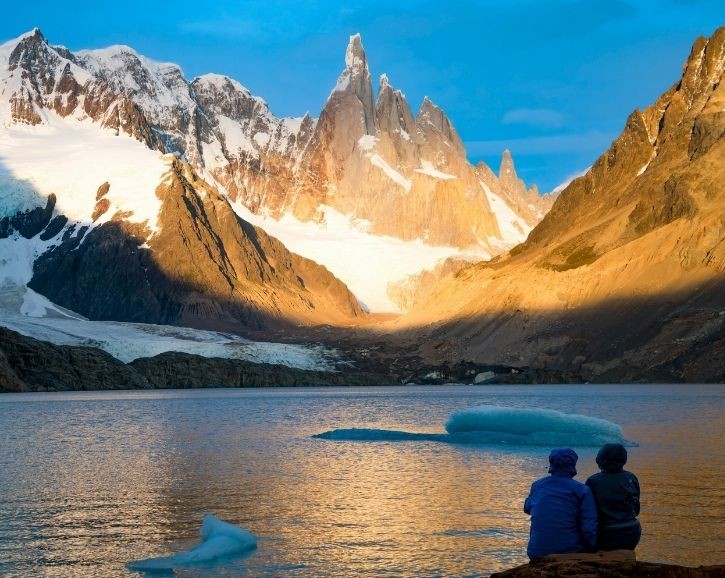
Luxury travelers are still booking rare destinations: East Africa’s migration corridors, the Galápagos, Bhutan, remote parts of Indonesia. Once there, though, the pace has slowed.
River cruise operators report longer requested port stays. Safari travelers are choosing smaller camps over dense lodges. Across South America, itineraries are stretching to combine adventure with food, wine, and cultural time within a single region.
For a developer, longer average stays change the underlying resort typology. Self-catering villa programs become more relevant relative to dense hotel-room counts. Kitchen gardens, cellars, and communal spaces see heavier use.
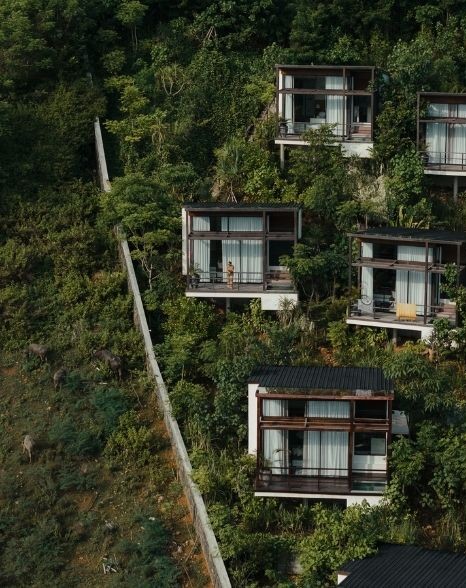
Guest turnover per room drops, which shifts the water and waste load calculations a design team runs at concept stage. On-site programming stops being a supplement to day trips and becomes the primary experience. That’s the argument for slower masterplanning: fewer keys, more space per key, deeper integration into the site’s own ecology. Not a template that could sit on any beach.
Where This Converges: Bali and the Wider Archipelago
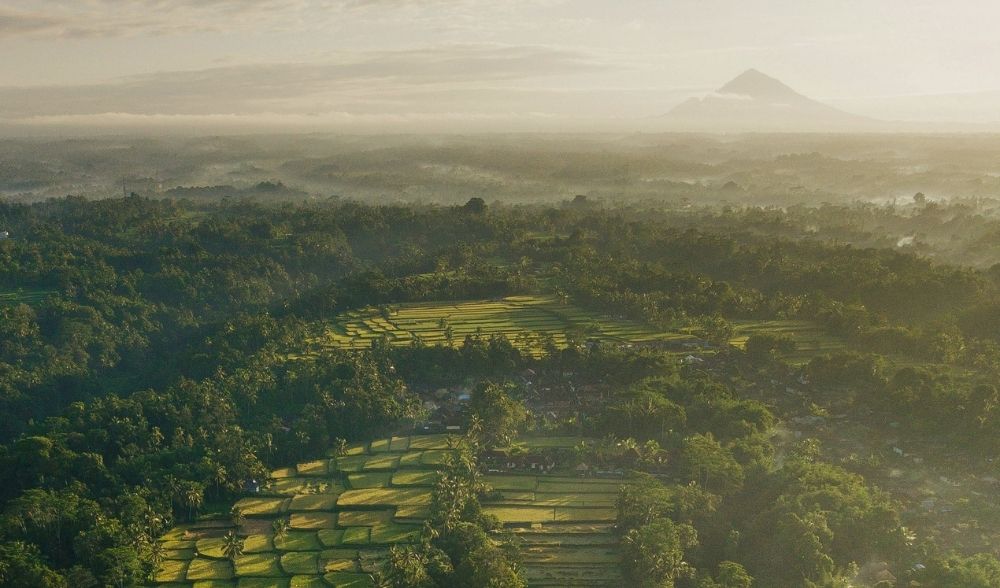
Bali has drawn sustained international press attention over overtourism in recent years, and the shift toward villa-heavy, slower-stay product across Ubud, Uluwatu, and the north coast is a direct response to that pressure.
Lombok, Sumba, Sumbawa, and Flores are earlier on the same curve, which gives developers there a narrower window to make different choices before the same dynamics play out. A property engineered around baseline data on water balance, biodiversity condition, and community economics is built for a longer operating horizon than one relying on a certification badge and a marketing narrative.
The Risk: Claims Outrunning the Engineering
The regenerative framework has real limits right now. Even its own authors call it a living approach, not a finished standard. The EHL playbook was built to evolve as more properties adopt it and more outcomes get measured.
Alessandro Inversini, the EHL professor who co-created it, puts the underlying logic simply: hotels sit embedded in a community and an environment, and regeneration is about making that connection tangible.
That honesty is useful. But it also describes a vacuum that marketing teams are already moving into faster than measurement standards can fill it.
There’s a recent precedent for how quickly that catches up with a brand. In 2024, Booking.com discontinued its own self-scored “Travel Sustainable” badge after the Dutch Authority for Consumers and Markets found the naming and scoring system potentially misleading. It moved to displaying only third-party certifications.
The badge had appeared on more than 500,000 properties. Within weeks, only about 16,500 properties carried a third-party certification.
There’s no reason to assume “regenerative” claims will get more regulatory patience than “sustainable” ones did. A hotel that markets regeneration without a biodiversity baseline, a water balance model, or a quantified carbon position is exposed to exactly that kind of correction, probably on a shorter timeline than the last one.
What Makes a Regenerative Claim Defensible
Baseline Before You Design
Net positive is a comparison, and a comparison needs a starting point. Biodiversity surveys, water balance studies, embodied carbon accounting, and community economic mapping need to happen before the first foundation is poured. Reconstructing them afterward to support a marketing narrative defeats the purpose.
Without that baseline, “net positive” is an assertion, not a measurement, and it gets treated as one.
Certification Is a Floor, Not a Strategy
Frameworks like EDGE, GSTC, EarthCheck’s regenerative pathway, and the Living Building Challenge give a project something external to be audited against, which matters more than the credibility of any single logo.
But certification alone confirms a project cleared its minimum thresholds. It says nothing about whether the specific systems on a specific site perform well over their operating life. That second question is a costing and engineering exercise, and it’s the one that tends to get skipped when certification gets treated as the finish line.
Design for the Climate You’ll Actually Operate In
A site bought five years ago was engineered, if it was engineered carefully at all, against the climate conditions of that period. Cooling loads, water systems, and storm exposure need modeling against the operating conditions of 2040. The land might have been acquired under completely different assumptions.
In the tropics, this gap between design assumptions and actual operating conditions is usually where energy and water performance quietly falls short of its projected numbers.
Engineering Belongs at Concept Stage, Not Commissioning
The single most common pattern behind a regenerative claim that doesn’t hold up is sequencing: architecture and interiors get resolved first, and an environmental consultant gets brought in near construction to validate decisions that have already been locked in.
Passive cooling strategy, water system topology, and site ecology are dramatically cheaper to get right at sketch stage than to retrofit at commissioning. A number of the outcomes regeneration asks for (restored waterways, functioning on-site food systems, intact biodiversity corridors) simply aren’t achievable as a late addition to a finished masterplan.
Frequently Asked Questions
Regenerative hospitality design goes beyond reducing a property’s environmental footprint. It aims for a net-positive outcome: the development leaves the surrounding ecosystem, water system, and community economy in better condition than before construction, beyond simply avoiding harm.
Sustainable hospitality generally targets net zero: balancing or minimizing negative impact. Regenerative hospitality targets net positive: actively restoring the systems the property depends on.
In practice, sustainability sets a baseline of responsible operation, while regeneration is a higher, less standardized bar layered on top of it.
Cost comes down to timing more than the regenerative design approach itself. The construction industry has documented this for two decades.
A framework known as the MacLeamy curve, first described by architect Patrick MacLeamy in 2004 and now a standard reference in integrated design practice, shows that the cost of changing a building’s systems rises sharply as a project moves from concept through construction. The ability of any single decision to affect performance drops just as sharply over the same period.
Passive cooling strategy, water balance, and systems integration follow that exact pattern: cheap to set at concept stage, expensive to unwind once architectural and structural decisions are locked. There’s no universal percentage that holds across climates, typologies, and site conditions. Credible cost figures come from a project-specific feasibility study, not an industry-wide average.
Among current frameworks, the Living Building Challenge comes closest to a regenerative standard, and it’s built differently from LEED or EDGE in a way that matters here. Most certifications assess design intent and award points before a building even opens.
LBC requires a minimum of 12 consecutive months of verified operational performance, covering net energy, net water, and materials, before it certifies anything. It measures what a building actually does after people move in. That’s arguably closer to what “regenerative” is supposed to mean than a badge earned at handover.
A property doesn’t need the certification itself to apply the same principle: publishing real water balance, biodiversity, and energy data over time is a credible signal on its own, built on the same standard LBC’s certification uses.
Through third-party-verifiable data collected before and after development: biodiversity surveys, water balance studies, embodied and operational carbon accounting, and documented community economic impact. Claims backed by this kind of baseline-to-outcome comparison hold up to scrutiny in a way marketing language alone doesn’t.

Closing
The word “regenerative” still describes something real: a shift in what guests, and increasingly regulators, expect a hospitality property to account for beyond its own operating costs.
For a developer sitting down with a design team today, the practical starting point is a biodiversity baseline, a water balance model, and a carbon position, established before the first drawing is finalized.
Booking.com’s Travel Sustainable badge is the cautionary case. A claim reached the market before the data backed it up, and the correction, when it came, was public.