
Date Published: September 14th, 2024
Written by: Vania Dian Gunawan, edited by Charlene Octavian
Since the Industrial Revolution, most of our activities have depended on energy. From electricity and transportation to the buildings we live in, energy is inseparable from our lives. The world remains heavily reliant on non-renewable energy sources such as fossil fuels, coal, petroleum, and natural gas.
The problem is that fossil fuels—coal, oil, and gas—are the leading contributors to global climate change, responsible for over 75% of greenhouse gas (GHG) emissions and nearly 90% of carbon dioxide emissions. These gases trap heat in the atmosphere, causing global warming and changing weather patterns. The Earth is warming faster than ever before, disrupting nature’s balance and posing significant risks to all life. That’s why switching to renewable energy is crucial in addressing this climate crisis.
What is Renewable Energy:
Renewable energy comes from natural sources that is replaced faster than they’re used, unlike non-renewable sources that take millions of years to form and emit harmful GHGs when burned. Generating renewable energy produces far fewer emissions.
Renewable Energy in Indonesia
In Indonesia, over 61% of electricity comes from coal-fired power plants, which will continue to meet demand unless emissions are reduced. Gas currently accounts for almost 20% of electricity generation. Meanwhile during the UN Climate Change Conference (COP 26) in 2021, Indonesia announced its ambition to reach net zero emissions by 2060.
Currently, Indonesia is the 12th largest energy consumer, the largest coal exporter, and the 7th largest economy, with coal and natural gas exports driving this growth. Indonesia is also rich in alternative energy resources, especially for geothermal, solar PV, and hydro energy, due to its equatorial location. However, the utilization of these abundant resources remains insufficient.
Types of Renewable Energy in Indonesia
-
Solar Energy:
The energy comes from the sun’s electromagnetic radiation, including light, heat, and ultraviolet rays. By installing solar panels or collectors, we can capture this energy to either produce heat (photothermal technology) or generate electricity (photovoltaic technology). Despite Indonesia’s technical solar potential of around 20,000 GWp, the actual installed solar capacity was only 271.6 MW in 2022, according to the Institute for Essential Services Reform (IESR) and Global Environmental Institute (GEI). This falls short of the planned 893.3 MW and lags significantly behind other countries’ gigawatt-scale solar utilization.
-
Geothermal Energy:
This renewable energy source utilizes heat or steam from underground reservoirs of hot water produced by the Earth. This heat can be used to power turbines that generate electricity. Indonesia is home to some 40% of the world’s geothermal resources, the second largest producer globally, after the US. However, challenges such as a difficult regulatory environment, limited infrastructure, and expensive drilling make it more challenging to access these resources. Currently, Indonesia has around 2.28 gigawatts of installed geothermal power capacity.
-
Hydropower:
Hydropower is energy generated by the movement of water that drives turbines. In Indonesia, this energy source is most commonly captured from river flows. The potential for hydropower in Indonesia is 19,385 MW, with an installed capacity of 6,121 MW as of 2020.
-
Biomass:
Biomass energy is a leading renewable option for Indonesia. Unlike fossil fuels, bioenergy has almost zero net CO2 emissions because the CO2 released during use is reabsorbed by the plants as they grow. Additionally, Indonesia’s large, forested areas provide various opportunities to increase biomass production for energy. As of 2019, Indonesia had 1,890 MW of installed biomass power capacity and an estimated potential of 32 GW.
-
Wind Power:
Indonesia has a wind power capacity of 9.861 MW. Due to its equatorial location, the average wind speed is only 3 to 6 m/s. Nusa Tenggara Timur has the highest potential with about 10.18 GW. However, the generally low wind speeds pose a challenge and require research into optimizing blade designs for lower wind conditions.
Challenges
Decarbonizing the power sector is crucial for Indonesia to meet its commitment to the Paris Agreement. To do so, Indonesia’s power sector must increase its renewable energy share to at least 45% by 2030—double the current target of 23% by 2025—and phase out coal by 2040. As of 2022, only 12.3% of Indonesia’s energy comes from renewables. Although Indonesia has significant renewable potential, progress is hindered by issues with capital, policies, and infrastructure. While the technology is available, developing new infrastructure for renewable energy often requires substantial initial investment.
The National Electricity Plan (RUKN 2019-2038) mandates PT PLN and private business area holders to implement renewable energy targets. However, challenges remain:
- RUKN lacks detailed guidelines to accelerate renewable energy development. The New and Renewable Energy Bill, intended to address these gaps, is stalled in the ratification process.
- Regulatory uncertainty, especially regarding incentives, pricing, and negotiations, discourages private investment.
- PLN faces challenges in deploying renewable energy, including:
- Lack of capital
- Lack of bankable projects
- Insufficient experienced personnel for renewable energy projects
Recommendations:
- Stronger Supervision: The government should improve monitoring systems and provide clear guidance to ensure all stakeholders, including non-PLN business area holders, are accountable and that renewable energy projects stay on track.
- Improved Support: Provide adequate technical, financial, and regulatory support to boost renewable energy development.
Eco-Mantra Projects Utilizing Renewable Energy
Eco-Mantra is an environmental engineering company based in Bali. We assist our clients in implementing various sustainable practices to minimize environmental impact, including the use of renewable energy. Here are some of our projects:

- Central Market: Featuring one of the largest retail solar installations in Indonesia, with 855 solar panels generating 465 kWp. Combined with their passive and active design strategies, this installation can achieve 42% energy savings.
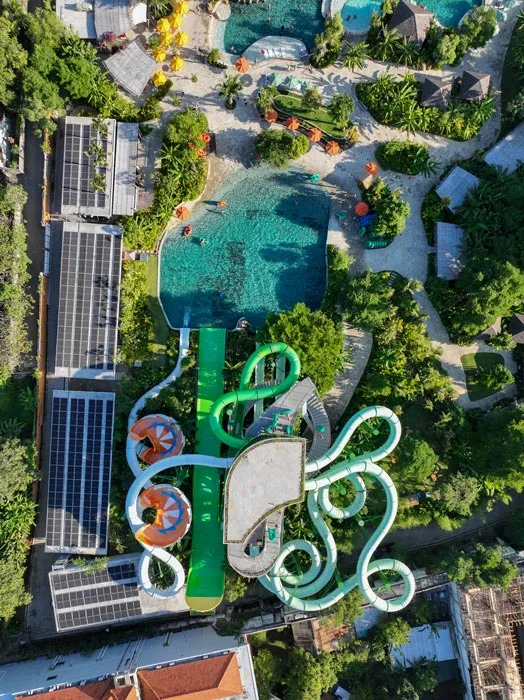
- Waterbom: Aiming to be the most sustainable waterpark in 2033, waterbom implements various sustainable practices to reduce their environmental impact. In terms of energy, they have installed around 360 solar panels on the park and office building that will generate up to 800 kWh per day, covering about 8% of their electricity needs
Click here to see more of our work and get in touch with us now if you are interested in minimizing the environmental impact of your properties!
Sources:
An Overview of Indonesia’s Geothermal Energy Sector
Causes and Effects of Climate Change
Enhancing Indonesia’s Power System – Executive summary
Masa depan hijau: Membuka potensi energi terbarukan Indonesia
Policy Assessment: Renewable Energy Development In Indonesia’s Power Sector
Renewable energy snapshot: Indonesia | Global law firm | Norton Rose Fulbright
Sumber Melimpah, Energi Surya di Indonesia Hadapi Berbagai Tantangan
Wind Power in Indonesia: Potential, Challenges, and Current Technology Overview