
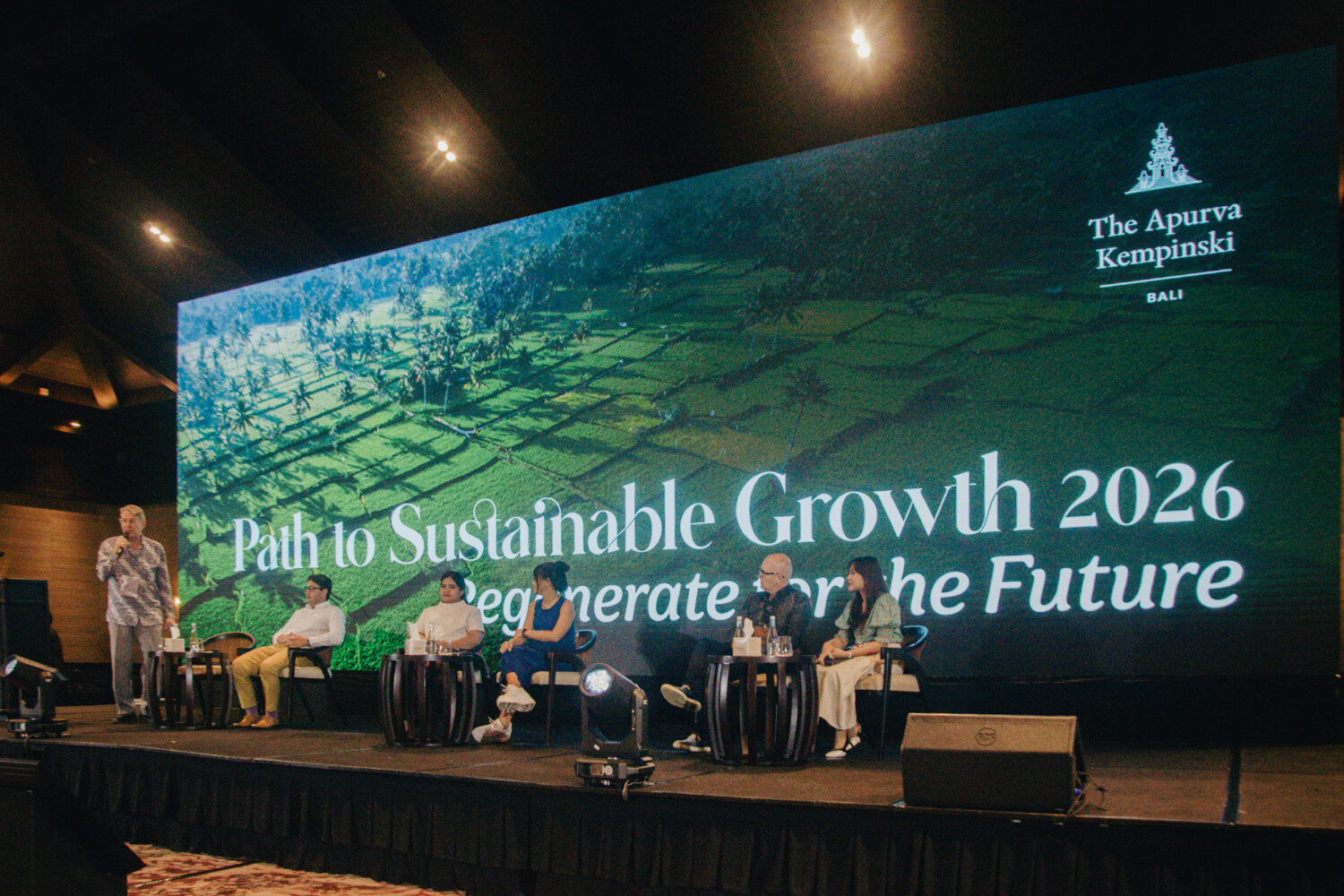
Nusa Dua, Bali — 24 June 2026.
Eco-Mantra joined the fourth edition of Path to Sustainable Growth 2026, the annual sustainability summit hosted by The Apurva Kempinski Bali, with CEO Maitri Fischer speaking on Panel Three: Regeneration. This year’s theme, “Regenerate for the Future,” set the question Eco-Mantra works on every day: once a property has reduced its impact, how does it go further and leave the place in better condition than it found it.
Path to Sustainable Growth 2026 runs the summit as an open industry forum and treats sustainability as a shared responsibility across the sector. The session Maitri spoke on focused on what properties take on once the efficiency work is done.
Maitri Fischer’s perspective on Bali
Maitri Fischer has lived in Bali since the age of one. He grew up watching tourism reshape the island, and saw up close what rapid development does to the land and water it depends on. That period became the starting point for his work. He holds a B.Sc. in Geosciences and Astrophysics and an M.Sc. in Hydrology, and runs Eco-Mantra on a scientific, systems-based view of how a development sits inside its environment. Since co-founding the firm in 2014, he has led more than 100 projects across Indonesia and the wider region.
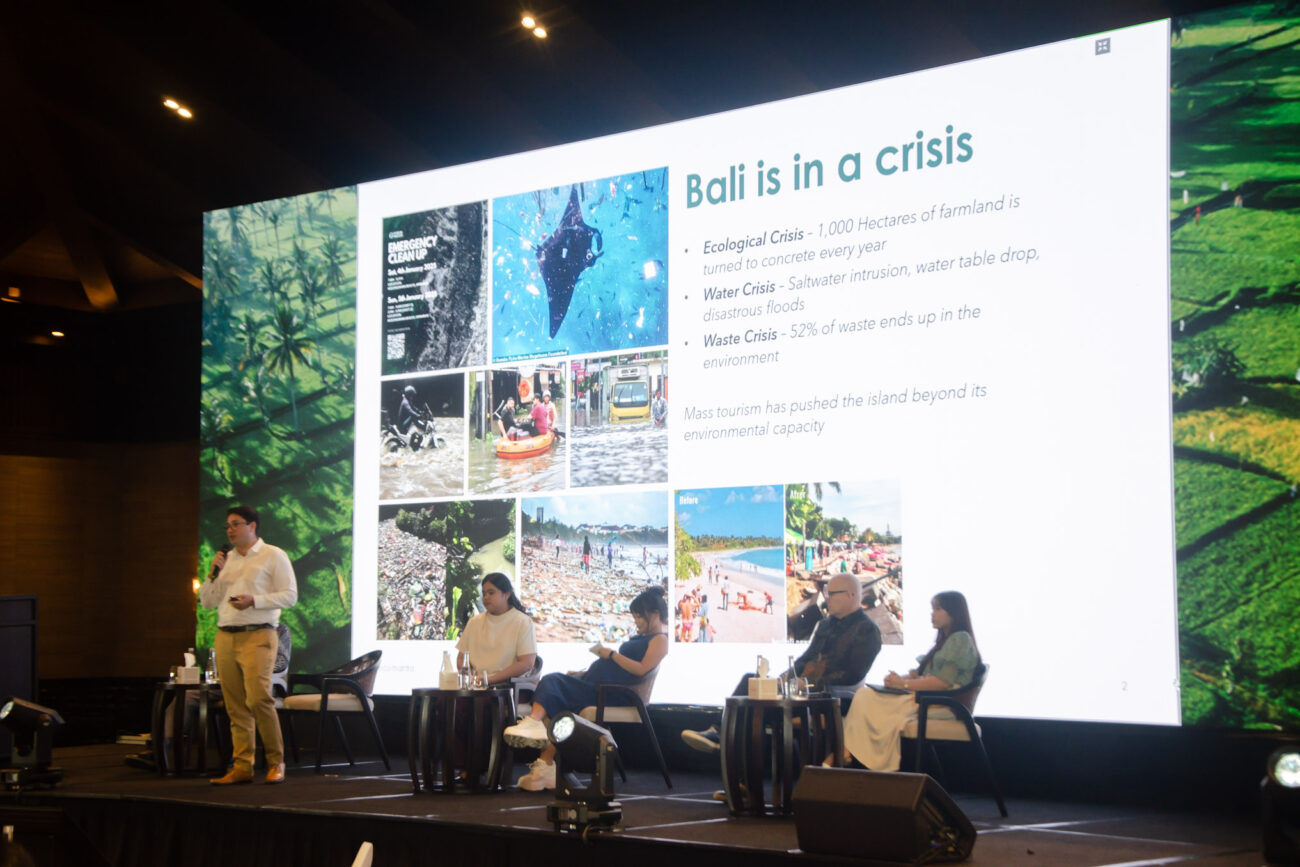
The island he grew up on is now under real strain. Productive rice fields keep being converted to built area. Freshwater is under pressure from groundwater depletion and saltwater intrusion along the coast. A large share of the island’s waste still escapes formal collection and ends up in rivers and on open land. Suwung, the landfill Bali has relied on for three decades, is closing in 2026, with no replacement facility planned before 2028. In several respects the island has been pushed past what its ecosystems can absorb. This is the context Maitri argues regenerative design has to address directly.
How is regenerative design different from sustainable design?
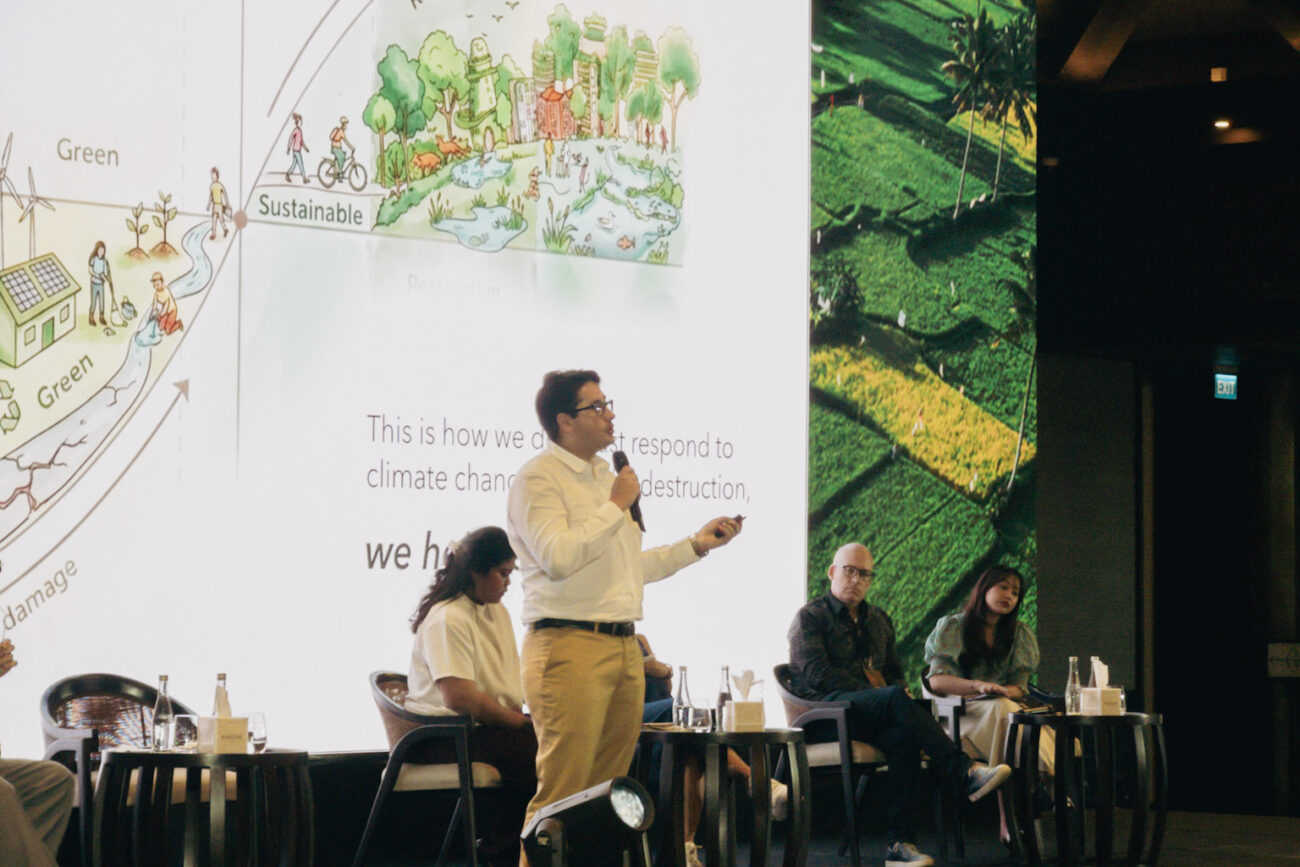
For most of the last two decades, sustainable design has been judged by how much harm a development avoids across energy, water, and resource use. That work remains the foundation for everything else. Biodiversity loss and resource scarcity have moved faster than efficiency gains, though, and reducing harm is no longer enough on its own. Regenerative design starts from a different brief. It treats a building as one component within a larger ecological system, and asks each part of the project, from energy and water systems through to landscape and biodiversity, to produce a positive result over time. The aim is for the building to support the recovery of the ecosystems around it.
Does regenerative resort design pay back?
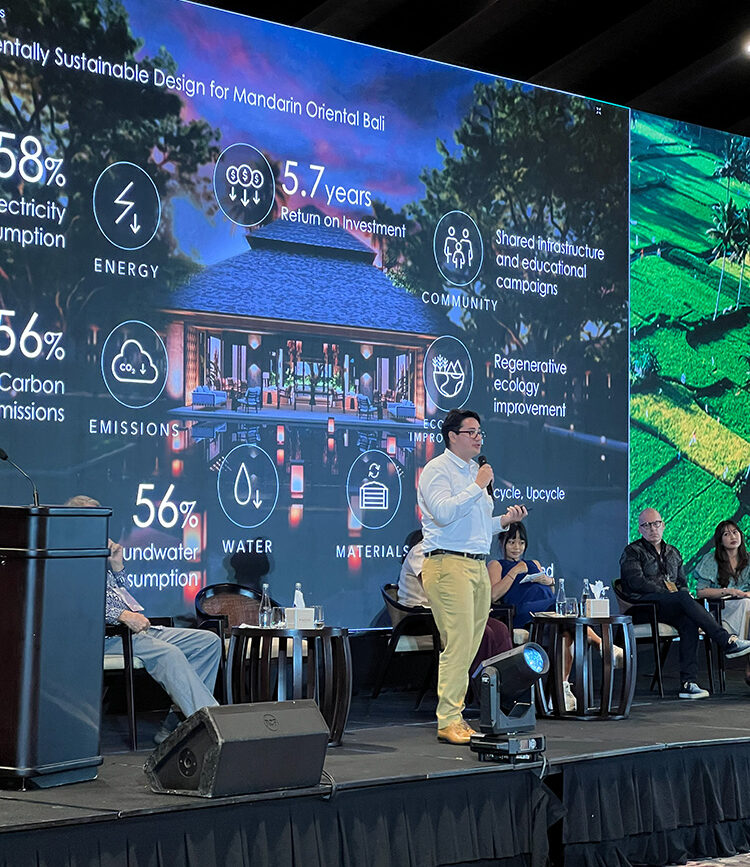
The case Maitri brought to the panel was that regeneration is an engineering and financial decision, specified at the design table and early enough to cost properly. On the new Mandarin Oriental Bali, Eco-Mantra’s integrated ESD strategies are projected to cut resource consumption by roughly 50%, for an estimated 1 to 3% increase in upfront capital and a payback period under six years. The capital uplift is small against the savings it returns. Once that efficiency baseline is in place, regenerative measures can be built on top of it.
What regenerative hospitality looks like in Bali
One of Eco-Mantra’s current projects shows the next step: a boutique hospitality development in Ubud being designed as one of Indonesia’s first genuinely regenerative destinations. Alongside the standard efficiency measures, the masterplan builds in biodiversity restoration, links with the surrounding community, and landscape strategies meant to improve the site’s ecological health over the life of the project. Success on a project like this is measured by how the site’s ecology improves over time, with the efficiency work forming the base it sits on.
Maitri shared the Regeneration panel with Jelle Therry of Urban Nature, Valerine Chandrakesuma of WeDoo, Syakieb of PT Suparma Tbk, and Philippe Micone of Noovoleum, in a session on technical innovation and industrial transformation moderated by Alistair Speirs of MVB Sustainability. Across four panels, this year’s summit reached beyond tourism into finance, agriculture, forests, culture, and engineering.
At the Eco-Mantra booth
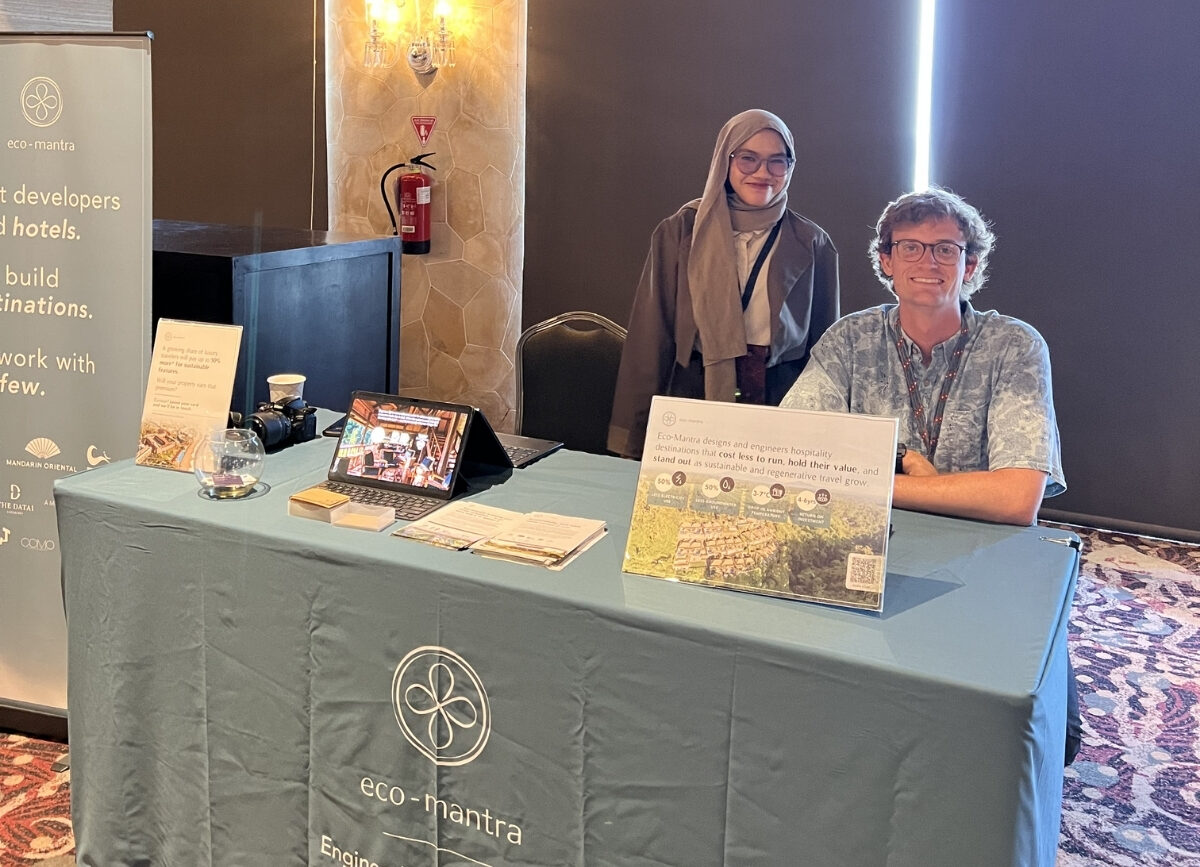
Eco-Mantra also exhibited at the summit, where the team met with developers, operators, and other attendees throughout the day. The conversations covered where regenerative and ESD work fit into both new developments and existing properties, and gave the team a chance to walk people through the firm’s approach and recent projects in more detail than a panel allows.
—
Eco-Mantra is an environmentally sustainable design and engineering consultancy working on regenerative and sustainable design across Indonesia and Southeast Asia. Its projects include the Mandarin Oriental Bali, Waterbom Bali, and Potato Head Bali, with the last two now operating at under 1% waste to landfill. Properties weighing where regenerative design fits into a new development or in operation can reach the team at eco-mantra.com.